Cutting an Egress Opening Through a Denver Foundation Wall
Most of the cost, and most of what can go wrong, sits in one step: sawing a taller, wider hole through the concrete that holds up the house and holds back the clay.
Egress window installation in Denver means cutting an opening that gives at least 5.7 sq ft clear, 24 in high and 20 in wide, with a sill 44 in or less off the floor, then setting a well at least 36 in out from the wall. Fixr puts a typical basement job at $2,500–$5,000 (2025).
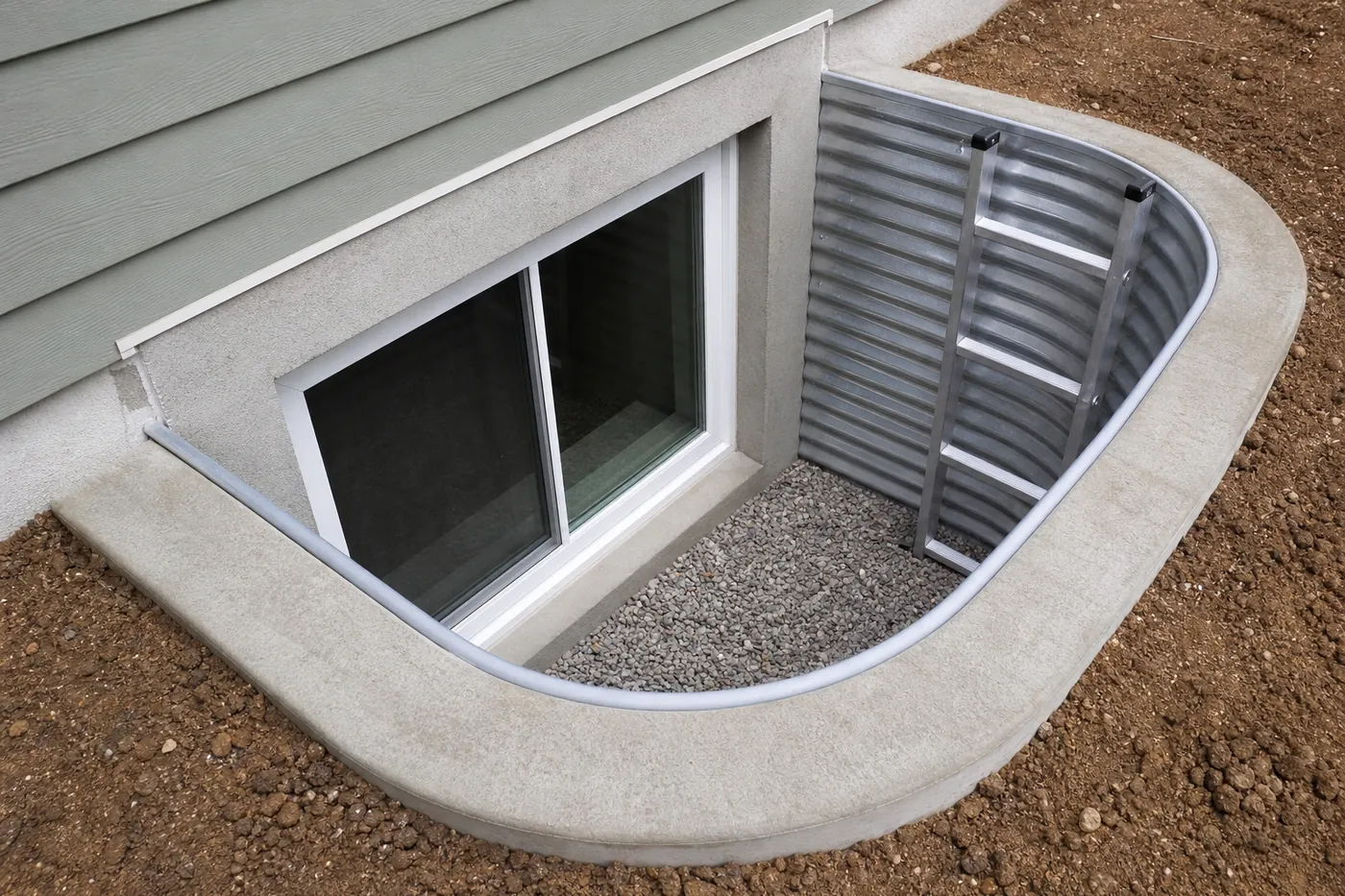
How is an egress window installed in a Denver basement?
- Utility locate. Colorado 811 must be contacted at least three business days before digging; the service is free.
- Permit. Permit drawings typically show the window's width, height and sill and the well's length and width. In a historic district, Landmark Preservation approval comes first.
- Dig. The outside is excavated to below the new sill, wide enough for the well.
- Cut. The opening is laid out and sawn with a wet saw; widened openings get a header or other support.
- Set the window in a buck, sealed and insulated.
- Well and drain. The well goes in with a ladder if it is deeper than 44 in, and its floor connects to the foundation drain.
- Backfill and grade so water runs away from the well, then inspection and inside finishing.
Enlarge the old window, or cut a new one?
A window up near the joists usually fails on sill height, not width. Lowering it means cutting the wall below, which is most of the work either way. Fixr lists the labor to make an existing opening bigger at $150–$200 and a basement window conversion for a bedroom at $1,700–$3,700 (2025); a full new opening with a dug well runs higher.
Denver lets a same-size replacement go without a permit, and its code adds a floor for replacement escape windows: at least 4 sq ft clear, 22 in high and 20 in wide. A swap that meets that keeps an existing opening legal. It does not turn a high, small window into a bedroom exit.
Casement or slider for a Denver egress cut?
The code measures the space you can climb through with the window open, not the frame. A casement swings its whole sash out of the way, so it reaches 5.7 sq ft in a smaller opening. A slider keeps half its width behind the fixed pane and needs a wider cut to get there. Fixr prices prefab casements at $200–$500 and sliders at $150–$700 before labor, and This Old House's 2026 homeowner survey averaged $529 and $531. Whatever the style, ask for the maker's stated net clear opening and check the sash can open fully inside the well. Ready.gov suggests practicing a home fire escape in under 2 minutes, and a sash that opens in one easy motion helps with that.
When does the cut need an engineer?
Denver's permit checklist says any structural design the residential code does not prescribe must be engineered, and it calls for an engineer's stamp on sloped excavations more than 4 feet deep that are steeper than 1.5 to 1. A wide opening, a wall that carries a beam, or a basement wall already cracked or bowed are the usual reasons. Fixr puts an engineer's letter or report at $300–$2,000. If the wall has moved, read about foundation repair on Denver clay before cutting, and see the egress window cost guide for Denver for each piece.
Questions homeowners ask
Can I dig the egress window well myself in Denver?
Only within tight limits. Denver's homeowner permits apply to an owner-occupied one-family home, and excavation and shoring under them are limited to 4 feet deep. Wells serving a full-height basement often go deeper. The owner must also do the permitted work personally, unless the city approves hiring licensed Denver contractors.
Which basement wall are you thinking about?
A line or two is plenty: a bedroom planned downstairs, a window up by the joists, a well that fills with snow, a crack in the wall. One independent specialist who works in Denver will get in touch to talk it through.